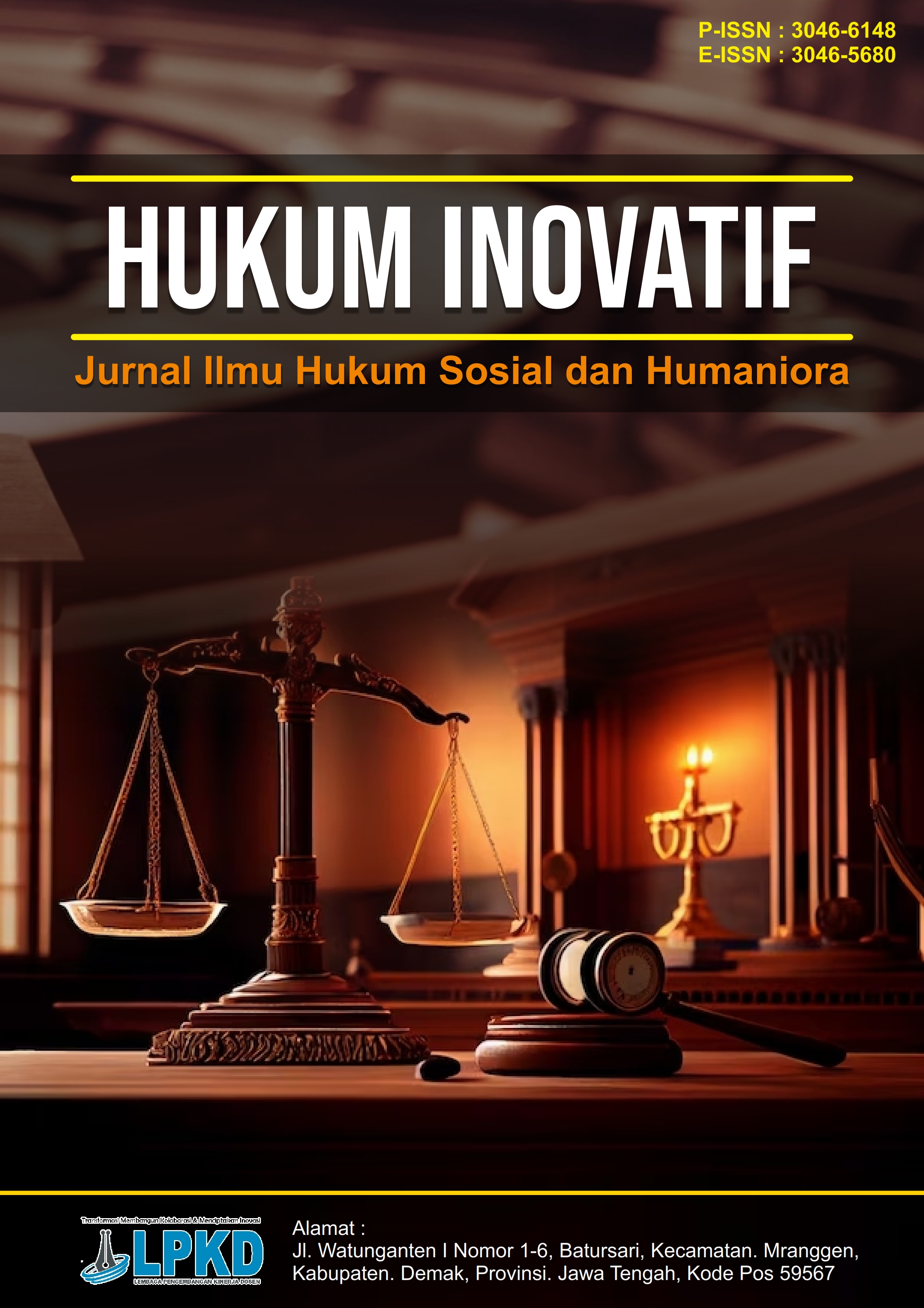
Tinjauan Kriminologis terhadap Praktik Ilegal Penangkapan dan Perdagangan Satwa Liar di Provinsi Lampung
DOI:
https://doi.org/10.62383/humif.v2i4.2277Keywords:
Criminology, Environmental crimes, illegal trade, wildlife, Wildlife poachingAbstract
Illegal wildlife capture and trade is a form of crime that has a serious impact on environmental sustainability. This practice not only disrupts the balance of the ecosystem but also threatens the sustainability of biodiversity, a vital asset for the nation and the world. Lampung Province is a strategic region for wildlife trafficking due to its proximity to inter-island distribution routes. This condition makes Lampung one of the provinces with the highest number of wildlife confiscations in Indonesia, thus requiring increased attention from various parties. This study aims to analyze the factors causing illegal wildlife capture and trade, while also identifying mitigation efforts. The research method used is a combination of normative and empirical juridical. Data were obtained through literature review and interviews with relevant agencies, then analyzed qualitatively using an interactive approach and legal interpretation. The results show that economic factors, socio-cultural factors, education levels, environmental conditions, and hobby-based activities are the main triggers for the rise in wildlife crime. Economic motives often drive people to get involved due to the high selling price of wildlife, while socio-cultural factors and low legal awareness exacerbate the situation. An environment that supports fishing activities, along with demand from certain hobbies such as animal collecting, further increases the opportunity for violations. In response, the Lampung Regional Police, in collaboration with the Natural Resources Conservation Agency (BKSDA) SKW III Bengkulu-Lampung, have implemented penal measures through law enforcement, as well as non-penal measures through education, outreach, and community empowerment. This study concludes that synergy between law enforcement, active community participation, and sustainable prevention strategies is key to reducing the rate of wildlife crime. With integrated collaboration, it is hoped that biodiversity can be maintained for the sustainability of the ecosystem in the future.
References
Arief, B. N. (2010). Bunga rampai kebijakan hukum pidana. Jakarta: Kencana.
Bobi, D., & Johar, O. A. (2021). Penegakan hukum terhadap perdagangan satwa liar menurut Undang-Undang Nomor 5 Tahun 1990. Jurnal Karya Ilmiah Multidisiplin (JURKIM), 1(1), 37–43. https://doi.org/10.31849/jurkim.v1i1.7889
Eleanora, F. N., & Wijanarko, D. S. (2022). Kriminologi. Malang: Madza Media.
Muhammad, A. (2004). Hukum dan penelitian hukum. Bandung: Citra Aditya Bakti.
Najeges, A., Tamza, F. B., & Monica, D. R. (2025). Jerat pidana pencurian hewan dalam bentuk pemberatan pidana dalam Pasal 363 ayat (1) ke-1 KUHPidana. Judge: Jurnal Hukum, 6(1), 327–340. https://doi.org/10.54209/judge.v6i01.1110
Nijman, V., & Shepherd, C. R. (2015). Wildlife trade from ASEAN to the EU: Issues with the trade in captive-bred reptiles from Indonesia. TRAFFIC Bulletin, 27(2), 57–64.
Panggabean, N., & Rahayu, M. I. F. (2023). Sanksi pidana bagi pelaku perdagangan satwa liar yang dilindungi secara ilegal. UNES Review, 6(2), 5809–5815. https://doi.org/10.31933/unesrev.v6i2.1374
Pribadi, A., et al. (2016). Potret perdagangan ilegal satwa liar di Indonesia. Jakarta: Perkumpulan Skala.
ProFauna Indonesia. (n.d.). Fakta tentang satwa liar Indonesia. Profauna.net. Diakses pada 10 November 2024, pukul 11.06 WIB, dari https://www.profauna.net/id/fakta-satwa-liar-di-indonesia#.Y3Gh-HXP3IU
Raditya, A. (2023). Protektifitas satwa langka di Indonesia melalui UU No. 5 Tahun 1990. Jurnal Hukum Pidana dan Kriminologi, 4(1), 57–63. https://doi.org/10.51370/jhpk.v4i1.92
Saturi, S. (2024, Februari 16). Mengapa perdagangan online satwa dilindungi terus marak? Mongabay Indonesia. https://www.mongabay.co.id/2024/02/16/mengapa-perdagangan-online-satwa-dilindungi-terus-marak
Shafira, M., Deni, A., & Tamza, F. B. (2022). Hukum pemasyarakatan dan penitensier. Bandar Lampung: Pusaka Media.
Susanti, E., & Rahardjo, E. (2018). Hukum dan kriminologi. Bandar Lampung: Anugrah Utama Raharja.
Yuliana, S. (2025, Januari 31). Lampung jadi provinsi tertinggi kasus penyitaan satwa liar di Indonesia. Kumparan. https://kumparan.com/lampunggeh/1zZzoob0rcM
Zakariya, R. (2021). Penguatan kerja sama lintas negara dalam penegakan hukum perdagangan satwa liar. Jurnal Hukum Lex Generalis, 2(11), 1039–1058. https://doi.org/10.56370/jhlg.v2i11.135
Downloads
Published
How to Cite
Issue
Section
License
Copyright (c) 2025 Hukum Inovatif : Jurnal Ilmu Hukum Sosial dan Humaniora

This work is licensed under a Creative Commons Attribution-ShareAlike 4.0 International License.