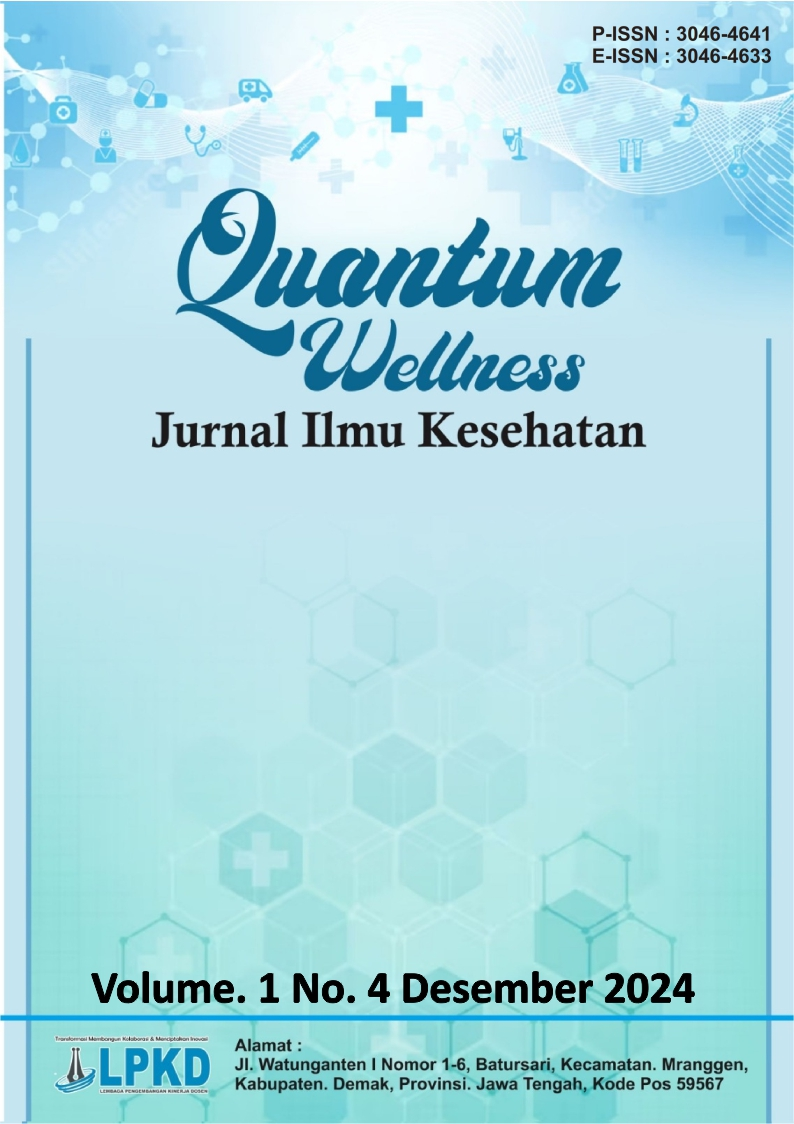
Literatur Review Manfaat Makanan Mengandung Probiotik Bagi Kesehatan
DOI:
https://doi.org/10.62383/quwell.v1i4.928Keywords:
Probiotic, Lactobacillus Plantarum, Lactobacillus CurvatusAbstract
This article discusses a literature review on the benefits of probiotic-containing foods for health. Fermented foods are food products processed with the help of microorganisms or enzymes, producing components beneficial to human health. In Indonesia, fermented foods such as tempeh, tapai, green tea, pickled vegetables, and bekasam are known for their high health value and potential to gain international recognition. This literature study aims to analyze the benefits of probiotics in fermented foods, particularly regarding digestive health, immunity, and disease prevention. Probiotics such as Lactobacillus plantarum, Lactobacillus curvatus, and Lactobacillus GG, as well as indigenous yeasts like Saccharomyces cerevisiae and Candida tropicalis, play a crucial role in the fermentation of traditional Indonesian foods. These microorganisms help improve gut microbiota balance, inhibit the growth of pathogenic microbes, and produce beneficial bioactive compounds. Research indicates that probiotics can enhance immune responses, reduce inflammation, and improve glucose metabolism and lipid profiles. The findings of this study underscore the importance of fermented foods as a public health strategy, considering their contributions to supporting digestive function, strengthening immunity, and preventing various diseases. Traditional Indonesian fermented foods not only hold cultural value but also have significant potential as functional foods to improve quality of life.
References
Angriani, W., Thamrin, S., & Desmawati, D. (2024). Potensi probiotik dalam peningkatan kesehatan lanjut usia. Majalah Kedokteran Andalas, 46(9), 1471–1484. https://doi.org/10.25077/mka.v46.i9.p1471-1484.2024
Ardilla, Y. A., Anggreini, K. W., & Rahmani, T. P. D. (2022). The role of indigenous lactic acid bacteria genus Lactobacillus in the fermentation process of durian (Durio zibethinus) for tempoyak production. Berkala Ilmiah Biologi, 13(2), 42–52. https://doi.org/10.22146/bib.v13i2.4619
Aryanta, I. W. R. (2021). Kefir dan manfaatnya bagi kesehatan. Widya Kesehatan, 3(1), 35–38. https://doi.org/10.32795/widyakesehatan.v3i1.1657
Astawan, M., et al. (2011). Potensi bakteri asam laktat probiotik indigenous sebagai antidiare dan imunomodulator [Potency of indigenous probiotic lactic acid bacteria as antidiarrheal agent and immunomodulator]. Hasil Penelitian Jurnal Teknologi dan Industri Pangan, XXII(1), 11–16.
Bardosono, S., & Sutanto, L. B. (2015). Manfaat probiotik dalam mendukung kesehatan bayi dan anak di Indonesia. Indonesian Medical Association, 65(12), 624–628. Available at: https://www.researchgate.net/publication/313861836
Firmansyah, A. (2016). Terapi probiotik dan prebiotik pada penyakit saluran cerna anak. Sari Pediatr., 2(4), 210. https://doi.org/10.14238/sp2.4.2001.210-4
Harsachatri, M. J. D. O., & Nurlaili. (2024). Manfaat probiotik dalam meningkatkan kekebalan tubuh [The benefits of probiotics in boosting the immune system]. Jurnal Pengabdian Cendikia Nusantara, 1(1), 28–31.
Hasanah, H., Jannah, A., & Fasya, A. G. (2013). Pengaruh lama fermentasi terhadap kadar alkohol tape singkong (Manihot utilissima Pohl). Alchemy, 2(1), 68–79. https://doi.org/10.18860/al.v0i0.2294
Kusumo, P. D. (2010). Potensi probiotik dalam mekanisme sistem imunitas. Majalah Kedokteran FK UKI, 28(4), 184–193.
Luminturahardjo, W. (2021). Peranan probiotik dalam penanganan infeksi COVID-19. Cermin Dunia Kedokteran, 48(5), 273. https://doi.org/10.55175/cdk.v48i5.1371
Mariyana, D. (2019). Potensi yoghurt probiotik dengan penambahan ekstrak ubi jalar ungu terhadap kesehatan saluran pencernaan dan kondisi fisik (performan) tikus coba yang diintervensi dengan Enteropathogenic Escherichia coli (EPEC) ATCC (35218). Jurnal Ilmu Pangan dan Hasil Pertanian, 2(2), 91–98. https://doi.org/10.26877/jiphp.v2i2.2701
Maunatin, A., & Khanifa, K. (2013). Uji potensi probiotik Lactobacillus plantarium secara in-vitro. Alchemy, 2(1), 26–34. https://doi.org/10.18860/al.v0i0.2298
Rahayu, Y., Mambang, E., & Miswanda, D. (2023). Edukasi makanan probiotik sebagai imunostimulan kepada kelompok ibu-ibu pengajian Mutmainah. Community Development Journal, 4(3), 6251–6254.
Wardani, N. K., Susanti, R., & Widiatningrum, T. (2021). Telaah studi kandungan probiotik pada fermentasi makanan khas di pulau Jawa. Jurnal Sains dan Teknologi Lingkungan, 7(1), 50–58. https://doi.org/10.29303/jstl.v7i1.208
Widyatmoko, H., Subagio, A., & Nurhayati, N. (2018). Physicochemical properties of cassava starch fermented by indigenous-tapai yeasts. Agritech, 38(2), 140.
Downloads
Published
How to Cite
Issue
Section
License
Copyright (c) 2024 Quantum Wellness : Jurnal Ilmu Kesehatan

This work is licensed under a Creative Commons Attribution-ShareAlike 4.0 International License.