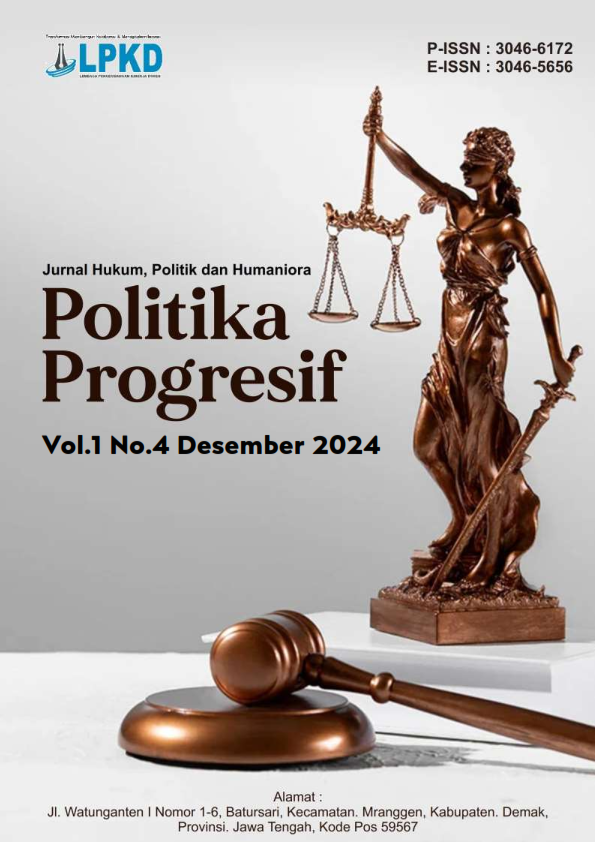
Pertanggung Jawaban Hukum bagi Pelaku Cyberbullying yang Menjadi Korban Penyebaran Data Pribadi
DOI:
https://doi.org/10.62383/progres.v1i4.993Keywords:
Technological developments, Access, InformationAbstract
In the current era of modern technology and through the development of digital information technology (IT), which is growing very rapidly and provides many conveniences for everyone to own and access various things in cyberspace, especially on the internet, and can be accessed quickly with a finger. just seconds to be able to display and get the information we need and we can find out via the internet. This is in line with the rapid development of information technology which makes it easier to obtain information and makes it increasingly difficult for us to escape from the convenience of technology which makes human life easier. Every developmental innovation is expected to be able to provide positive benefits for human life in the technological progress which has greatly developed in the technological era. creating many conveniences for accessing things in information systems. It can be concluded that the progress of the virtual world (internet) has changed the times without limiting computer network providers which contain many different systems. And all information activities can be accessed easily via social media, and this is what makes people dependent on technology as a daily necessity to increase convenience and obtain information quickly
References
Budhijanto, D. (2010). Hukum Telekomunikasi, Penyiaran & Teknologi Informasi: Regulasi & Konvergensi. Bandung: PT. Refika Aditama.
Djafar, W. (2017). Big data dan pengumpulan data skala besar di Indonesia: Pengantar untuk memahami tantangan aktual perlindungan hak atas privasi. Jakarta: Internet dan Hak Asasi Manusia.
Djafar, W., & Komarudin, A. (2014). Perlindungan Hak Atas Privasi di Internet-Beberapa Penjelasan Kunci. Jakarta: ELSAM.
Human Rights Committee. (1988). General Comment No. 16 on the Right to Respect of Privacy, Family, Home and Correspondence, and Protection of Honour and Reputation (Article 17). Dalam Privacy International Report (2013, hlm. 1-2).
Indriyani, M., Andaria, N., Sari, K., & P., S. U. W. (2017). Perlindungan privasi dan data pribadi konsumen daring pada online marketplace system. Justitia Jurnal Hukum, 1(2), 191–202.
Makarim, E. (2003). Kompilasi hukum telematika. Jakarta: Raja Grafindo.
Makarim, E. (2014). Kerangka kebijakan dan reformasi hukum untuk kelancaran perdagangan secara elektronik (e-commerce) di Indonesia. Jurnal Hukum & Pembangunan.
Pratama, G. Y., & S.A. (2016). Perlindungan hukum terhadap data pribadi pengguna jasa transportasi online dari tindakan penyalahgunaan pihak penyedia jasa berdasarkan Undang-Undang Nomor 8 Tahun 1999 tentang Perlindungan Konsumen. Artikel Prosiding, 5(3), 1–19.
Rosadi, S. D. (2017a). Implikasi penerapan program e-health dihubungkan dengan perlindungan data pribadi. Arena Hukum, 9(3), 403–420. https://doi.org/10.21776/ub.arenahukum.2016.00903.6
Rosadi, S. D. (2017b). Prinsip-prinsip perlindungan data pribadi nasabah kartu kredit menurut ketentuan nasional dan implementasinya. Arena Hukum, 19(3), 206–212.
StatSoft, Inc. (1997). Electronic Statistic Textbook. Tulsa, OK: StatSoft Online. Diakses dari http://www.statsoft.com/textbook/stathome.html pada 27 Mei 2000.
Downloads
Published
How to Cite
Issue
Section
License
Copyright (c) 2024 Politika Progresif : Jurnal Hukum, Politik dan Humaniora

This work is licensed under a Creative Commons Attribution-ShareAlike 4.0 International License.